| By EMS Chief Brian Pasquale | |
| August 31, 2008 | |
Since the mid-1990's there has been an increased awareness of "active shooter" incidents. An "active shooter" is defined as: Suspect(s) activity is immediately causing death and serious bodily injury. The activity is not contained and there is immediate risk of death or serious injury to potential victims. What sticks out more predominantly in the minds of smaller town residents is the increasing number of school-related incidents. Many police departments train vigorously to mitigate these incidents and respond to the shooter, however initial, lifesaving medical interventions are typically left unaddressed in these training models. During a four day exercise held in Limerick and Trappe, police and medical personnel trained together on basic and advanced lifesaving techniques in tactical and austere environments. In April of 1999, two high school students went on a killing rampage in Littleton, Colorado at
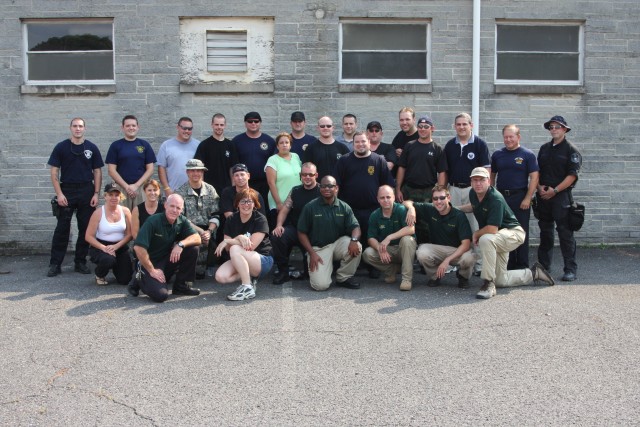
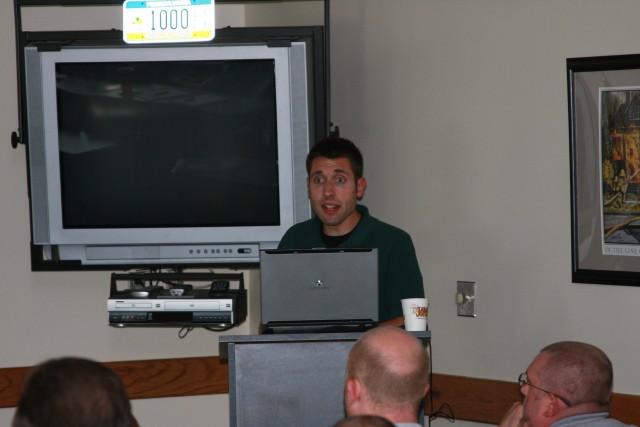
The Columbine High School incident, brought to the forefront of public awareness the fact that police departments could no longer depend on the special skills, weapons and tactics of SWAT teams in resolving some incidents. In suburban areas such as the Western Montgomery County region, specialized tactical teams are comprised of on-call personnel from multiple departments. They are mobilized to respond to calls and depending on various factors, the response to "on-scene" times may be extended as in the Littleton Colorado incident. As a result, in many cases traditional force police officers will respond and perform as ad-hoc teams to incidents, and as such may be relied on to provide initial life-saving medical interventions, triage and/or casualty evacuation. Traditional medical resources may be limited due to safety reasons from gaining access to victims. Keeping this in mind, Tac-Med LLC, a private teaching agency, partnered with local emergency services to conduct tactical medical training. Beginning on July 17th, 2008 Tac-Med LLC, in cooperation with Trappe Fire Company No. 1 Ambulance, Limerick Fire Company and the Perkiomen Valley School District began a small-scale tactical medical response training exercise that lasted four days. Each day consisted of five hours of classroom instruction, and team-building skills. In the afternoons, the class divided into four ad-hoc response teams to practice tactical medical response techniques. The topics covered during the class included immediate action hemorrhage control, airway interventions, chest wound management as well as extrication techniques for the individual officer or medic. These techniques, taught under the tenets of tactical casualty care (TC3), have been studied by the military and determined to be the most effective techniques for immediate management of tactical injuries at the point of wounding. The military teaches these four specific techniques to soldiers, non-medical and medics alike, for the purposes of providing immediate life-saving interventions as close to the point of wounding as possible.
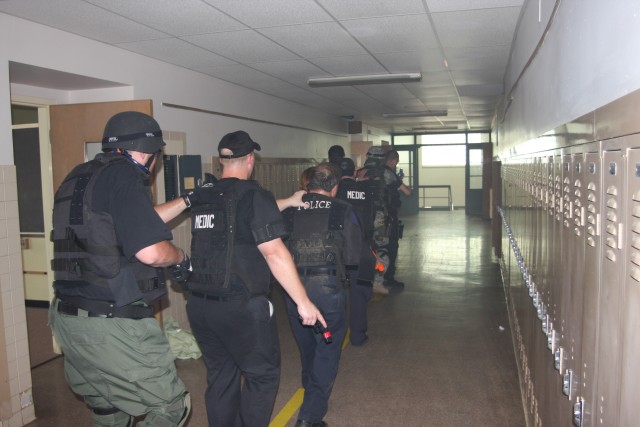
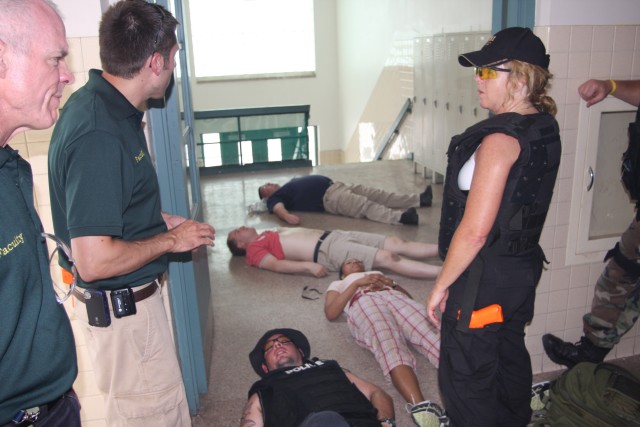
Other topics offered during the class were for the long-term support of police and tactical response teams. Basic sports medicine, preventive medicine and medical intelligence topics were presented to provide students with skills valuable to regular police as well as tactical teams during preparatory and training time. Instructors of the program include Dr. Neubert, the volunteer physician medical director of Trappe Fire Company No. 1 Ambulance and Limerick Fire Company. Other instructors include current and retired military, and law enforcement personnel from various agencies. Sunday, July 20th, 2008, the final day of class, the day began with the teams assigning team leaders and receiving small bits of information such as "credible" threats and "possible" location data. The teams were responsible for conducting operational planning, medical intelligence, as well as coordinating resources, and establishing an on scene rapid incident command. Each of the four teams was dispatched to a small "missions" at remote locations within Trappe Borough. All of the teams had radio communications with one another as well as with a central "dispatch" center. While in the midst of what the students believed to be their final evaluation scenario, a call came out from the "dispatch" center for "reports of an explosion at the [former] "Perkiomen Valley Middle School, 1st Avenue, Trappe Borough." This began the true final evaluation. There were fifteen role players involved other than the class attendees. These role players functioned as middle school students, victims, as well as four "shooters." The scenario took part in the former Perkiomen Valley Middle School building, located at 1st Avenue, in Trappe Borough. Teams converged on the school from various locations with instructors embedded in their teams as evaluators and as safety monitors. Upon the arrival at the school the teams coordinated between themselves and central dispatch to respond to the incident. The school building, due to its size provided several challenges for such a small group of ad-hoc responders. Working with one another, and employing lessons learned the teams systematically moved through the building responding to situations as they presented and provided immediate medical interventions and rapid evacuation of the injured. The teams were able to conduct their operations under various stressors such as light deprivation in smoke filled rooms, sound deprivation and under the constant threat of an "unsecure" scene. Attendees of the course included police and EMS personnel from numerous agencies such as Montgomery County Corrections, Upper Moreland Police, Virtua Health Systems, Wilmington Delaware Police SWAT, Skippack EMS, Trappe Fire Company No. 1 Ambulance, Plymouth Ambulance, Minaquas Fire Company EMS, Allentown EMS, Bensalem EMS, US Coast Guard Reserve as well as others from the local area and neighboring regions. Lessons learned during the program included the provision of medical care in forward environments during law enforcement operations. In addition, non-law enforcement personnel had the opportunity to see operations through the purview of the police officer, and police personnel gained medical skills necessary for preserving life long enough for the victims of these incidents to gain access to traditional medical care. Since 1999, several other incidents have reinforced the need to consider non-traditional medical response in law enforcement operations. The shooting incident at Virginia Tech in April 2007 and the Amish school shooting, in October 2006 in Lancaster, PA reminds us that these incidents can happen close to home, places where ad-hoc response teams both medical as well as law enforcement may be necessary. Special thanks and recognition are extended to Mr. Scott Clemmer of the Perkiomen Valley School District for the coordination of the former Perkiomen Valley Middle School in Trappe building for this exercise. Cooperating agencies for this training included Montgomery County Emergency Communications Center, Tac-Med LLC, Trappe Fire Company No. 1 Ambulance and Limerick Fire Company. |
|
|
|
|
|
|
|
|
|