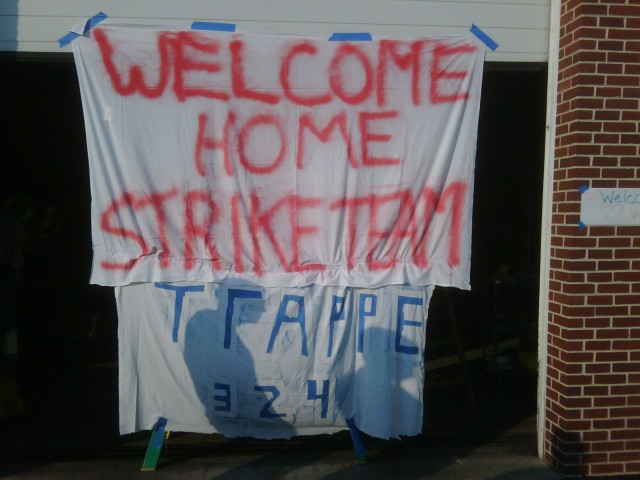
| When you volunteer to be part of a STRIKE Team, you're never sure when the time will come when you will be called on to use the training, equipment and resources needed for deployment. On August 29th, the STRIKE Team from Trappe Fire Company was introduced to the reality.
The four-person team of Diane Keenan, Jeff Long, Sean McCarraher and Dave Sauls were quickly swept up in the hurricane force winds of Gustav. Before the category 3 hurricane made landfall, the team, along with teams from Goodwill, Second Alarmers, Lower Fredrick and multiple Bucks County squads, urgently headed south. Into what, none of us knew. All we did know was that the people of Louisiana needed our help.
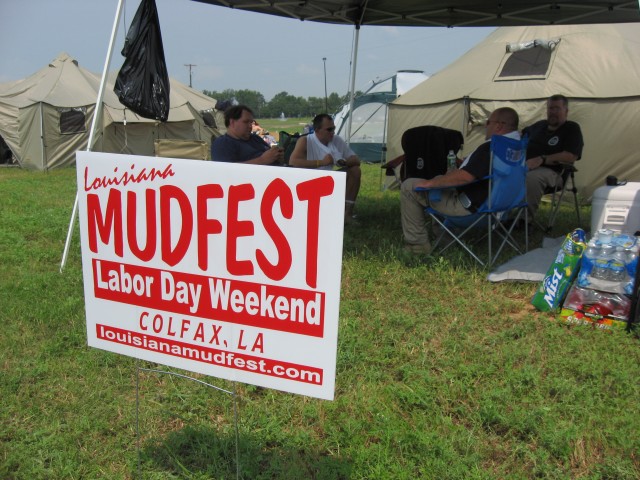
These deployments are very fluid events that swirl, flow and change constantly. Flexibility as a mind set is key. Before we reached our initial destination of Jackson, Mississippi we were diverted to Alexandria, Louisiana. Our mission there was to set up camp and begin sending teams to New Orleans and surrounding areas to evacuate the sick and injured from hospitals and nursing homes. Keep in mind, this was after a nearly 26-hour trip. Many of the crews on these initial missions were gone for another 20 hours. For those who stayed back to pitch tents and shelters in the hot, sticky 98-degree sweltering heat and humidity, rest finally came at around 4 in the morning. Wake up call was for 8am.
If you have never spent time in the south, words cannot accurately describe the humidity.
We had little time to get acclimated to the southern sauna-like conditions. The heat soon contributed to several team members becoming overheated and dehydrated. At one point, I drank so much water that both of my hands swelled. At least I was hydrated.
Even though it meant another pack-up and move, we were happy to get word that we were moving into a brand new hurricane shelter to ride out the impending storm. It provided safety and air conditioning.
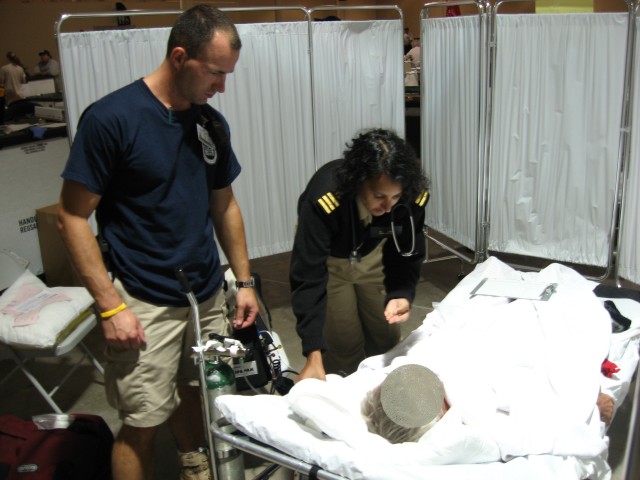
The square footage of this shelter had to equal that of the Super Dome in New Orleans. All 250 first responders took over one quarter of the warehouse type facility sprawled out with cots and backpacks full of personal gear. The Red Cross, FEMA and nearly 3,000 evacuees occupied the other areas. A makeshift hospital was set up in the section next to ours with field hospital beds, partitions, doctors and nurses from the National Guard. What they did not have however, was 12-lead ECG capabilities, a lab, or vital medications. That is were we stepped in. We provided a roaming ALS crew equipped with a Lifepack 12 and first-in bag full of life saving meds for the hospital. We assessed and helped treat evacuees with chest pain and seizures. The doctors were grateful. They were out of their comfort zones. We, on the other hand, were right where we had been trained to be.
At the height of the storm, around midnight, the sewers started to back up in the shelter. We got word we were moving out, far south of New Orleans, to help with search and rescue, treatment and triage in an area just hit by the center of the storm. Pack up again, gear up again and move out. By 0500 we were on the road again.
Gustav hit the town of Thibodaux, Louisiana hard.
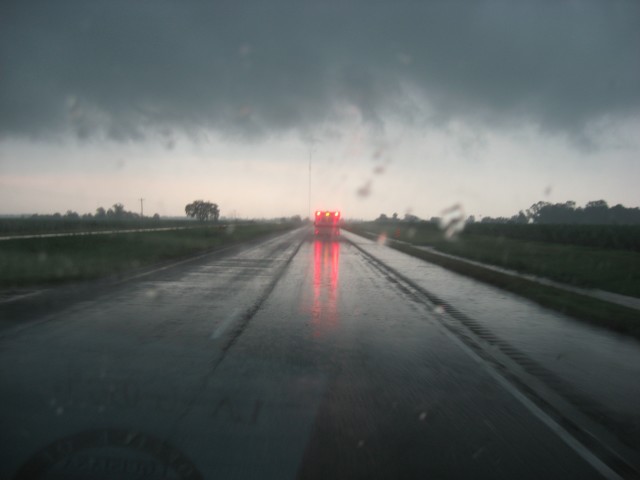
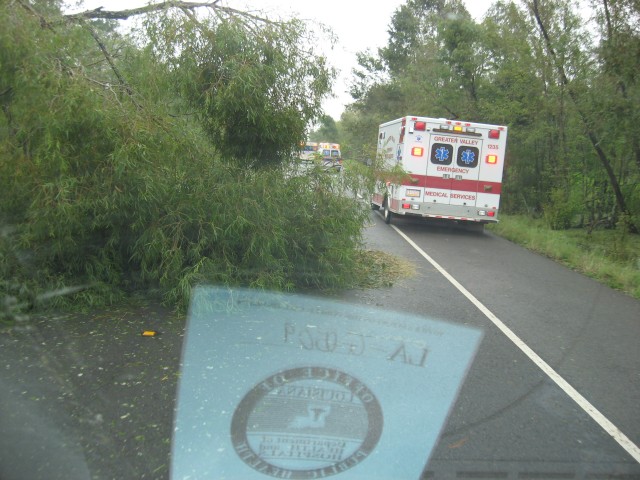
As we drove in we were greeted by heavy winds and thunderstorms with the potential to produce Midwestern-like tornados and more devastation. Trees and debris still littered the roads making driving a challenge. But all along the route the folks of that southern Louisiana town stopped their clean up activities to wave and welcome us to their Parrish. They were happy to see that, this time, help was already in place.
We took over the local high school. We created triage and treatment sections in a small gym and used the larger gym for sleeping quarters. We were told that multiple Blackhawk helicopters would soon be landing, bringing us scores of injured hurricane victims. We quickly created landing zones in the parking lot of the football stadium using spray paint to mark out the areas. And then we waited, expecting the worst.
Thank God the worst did not come to that little town. This time around the people of Louisiana evacuated to safer ground, having learned a terrible lesson from Katrina.
Another move, another mission, another town…… We packed up and headed north to the town of Zachary, Louisiana. This small community of approximately 11 thousand people needed their hospital and nursing home evacuated. Rising water had caused even the backup generators to stop working.
As we arrived, nurses and administrators from the hospital met us with snacks and water. You could tell by their wide-eyed expressions and weary, worn faces they needed help and were so glad to see us.
The Trappe STRIKE Team agreed to take two patients at once since neither was critical and both were headed to facilities near each other. As we walked into the dark, moist hallways of the hospital, the nurses, armed only with flashlights, lead us to our waiting patients. When I walked into the room I swear I could cut through the humid air with a rescue knife. I was amazed how my 93 year-old patient survived in that room. I was given a wet slap in the face as to why this mission was so critical. The patients never complained. The 93 year-old was only concerned with the whereabouts of his harmonica, in the key of D, which I found nestled in his covers. As we exited the dark hospital lit only by small beams from handheld lamps, he played the "Battle Hymn Of The Republic" and we sang. He serenaded us all the way to New Orleans. They estimated the evacuations would take up to 4 days. Our mission was completed in about 4 hours.
Southern hospitality is at its best when the circumstances are at their worst. You will never be more appreciated, more respected, more cared for than when you deploy to the hurricane-hit south. We were fed, clothed, showered and comforted with kind words by hospital staff and victims alike. This is not why you sign up for this duty but it sure helps to soften the heart.
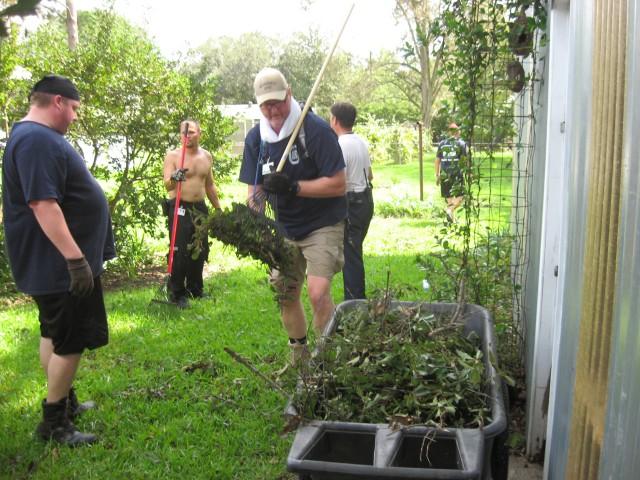
One afternoon, several team members volunteered to clear and clean about 4 decimated acres of land owned by the St. John the Baptist Catholic church. It was hot, hard, landscaping-type work. No one had signed up to build calluses on their hands by raking, chopping and bagging hurricane debris. Which NIMS course covered that? But, it was some of the most rewarding work we did on this deployment. The Father of the church prepared from scratch, a lunch of dirty rice and hot dogs. He also invited all of us and the rest of our teams back for dinner that evening for homemade gumbo. It was a big old potluck dinner. Don't get me wrong. The MREs we munched on for most of the trip were greatly appreciated. But this was home cookin!
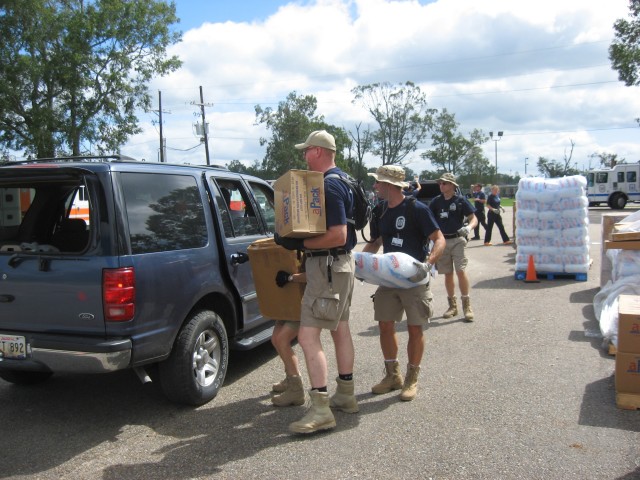
The next day the Zachary Fire Department needed help handing out food, ice and tarps to their residents. All Montgomery County squads participated, clearing a parking lot of 400 waiting cars and filling hundreds more. After filling one car with eight small kids in it we were given a boost. As I started to close the car door, a wee voice from inside squeaked, " God bless you all." My police officer partner cried.
If you have the opportunity to deploy on a similar mission, make sure you are prepared. Be prepared to work hard for 23 to 36 hours straight in terrible weather conditions, on little to eat, and with no creature comforts of home at your disposal. Be prepared to pack up and move at a moment's notice, again and again and again. Be prepared to have a life-changing experience that will bring you home, back to the people who love you, with a softened, servant's heart. |